Plane takes off

An UHMLG summer trip away – day 1

This was my first attendance at an UHMLG event (the summer residential conference) and it was great to meet new people and catch up with familiar faces.  Sadly we only got as far away as Luton but the hotel was comfortable and you got used to the plane noise.

The theme was “influencing, inspiring, leading: reflections on personal and professional impact”.

We opened with Jane Savidge talking about use of leadership circles.  These are grounded in the Nancy Klein thinking environment from “Time to think”.  I read this a while ago hoping it would help me find ways to lift my thinking beyond immediate pressing issues.  In practice it is very much about listening and good questions.

Leadership circles (8 to 10 people) are aiming to break down silos and the gap between academic culture and professional services. In their aim to encourage deep thinking they do correspond more to what I had hoped for.
It sounds like it has been successful for forming relationships. It has also influenced more widely how meetings are being run throughout the university – you can see the people who are involved. The circles were related back to the 7 Habits idea of circles of influence – these have been expanded.
Anthea Sutton followed with “Librarian as leader: skills, competencies & development opportunities in library and info profession”
This was based on original research for NLH back in 2008 (later published in HILJ) and updated for a talk at the recent EAHIL conference.
Andrea contrasted her own leadership journey where she has risen (in her view accidentally) into a management position over her time at ScHARR. Management not synonymous with leadership but management can go in hand with it.  On the other hand she offered her colleague – Andy Tattersall. Andy is a specialist in electronic networks, communications. Has influence in the organisation and beyond. Very good at monitoring future trends. Leadership through expertise.
Literature says leadership is hard to define. Is one profile appropriate for our profession anyway?  A magic check list is not possible, there is no single profile, leadership courses are not Fairy dust (Greenhalgh).
Current opportunities – formal programmes (CILIP leadership thing). Your institution may be running them. Leadership MOOCs, mentoring / coaching, observation, peer support / networking, reading, writing / publishing.  360 degree feedback highly recommended – something I have always tended to dodge.  We are not good at assessing our own competence. Something to think about as (hopefully) more people engage with the PKSB.
After tea we were treated to a talk by Roisin Gwyer on influencing up.  I took limited notes as I was focussed on listening.  Starting with Yukl influence tactics we had a tour of a range of models and theories but the value for me came from the experience shared. I loved the ideas around being opportunistic – we are going to need to say things twenty times to get ideas accepted.  Having an acceptable compromise position ready in advance is something I need to do more of. Hopefully the slides will go on the UHLMG site.
The last couple of segments were a round table that worked moderately and then an update on Knowledge for Healthcare. Great to see this progressing – and I am now getting more actively involved in the national programme through Chairing a task and finish group on Metrics (get in touch anyone with strong views!).
After the group AGM we were whisked off for a BBQ at the rather lovely Offley Place.
Update catch up October 2014

You know the score – still not really catching up with these.

Useful article by Phil Bradley on net neutrality particularly in the light of recent undermining of this in Europe.

Good to hear from @AgentK23 on her trip to the m-libraries conference in Hong Kong. Discussion of WhatsApp usage reflects my experience that it is increasingly being used for group communication by medics. Another case of being where the users are perhaps?

The discussion of her event amplification through live tweeting is a good reminder to the non tweeps of what people are up to when they are tapping away. You still get some anti tweeting / mobile feeling from time to time at conferences.  Great when this is done well – I was sat near @ilk21 at the recent UHMLG Summer Conference (post to follow) and she is great at adding value to what is being said.

Another article on RDA that I dutifully read but cannot say I understood.

I particularly enjoyed the report by Charles Inskip from Digital Libraries 2014. I do not recall seeing much about this at the time and the article really sets the talks in context. Paper books for long term preservation of records!

With the Radical Librarians having gathered in Huddersfield lately I picked out the report of Dave Greene from EFF talking at IFLA.  I like his idea of libraries providing secure private internet connections as part of a wider role for protecting privacy of access to information.


A visit to Stockwell Street

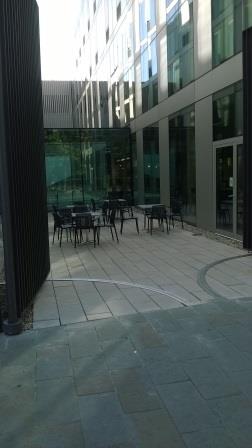
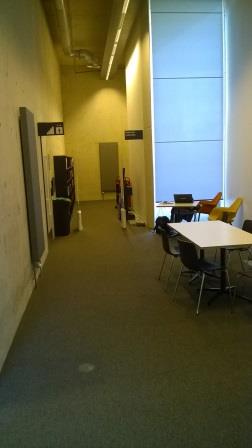
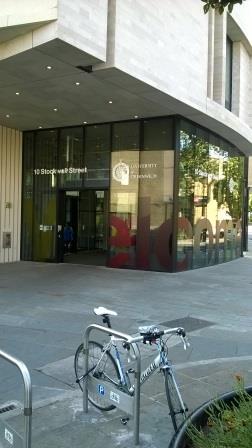
I recently had the opportunity to tour the University of Greenwich Library on Stockwell Street.  It is always interesting to have a poke around someones library – particularly when it is a shiny new one like this (opened September 2014).  I am also involved in lots of discussions about future library spaces at work so it was very helpful to see some of the new style fixtures in operation.

Library Entrance

Library Entrance

seats

Tucked in seating

I was a bit grumpy when I realised that the Library had been built on what was my favourite market in Greenwich. The small consolation is that they were going to build flats on it otherwise.  The entrance is rather nice with a general reception before you reach the library gates.


library lobby

Lobby area


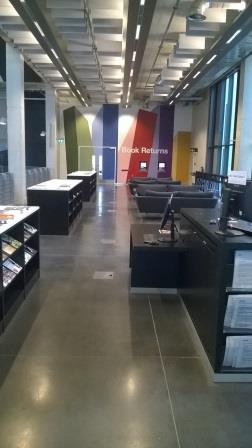
There is plenty of open space on the ground floor.

To the right of this shot is a single person desk for directions and to support use of the self issue kiosks.  The white units hold a few paper titles (architecture students use this site amongst others) and have new books displayed on top.

The interior is all brushed steel and polished concrete with predictable results – note the ceiling mounted baffles.

There are lots of different kinds of seating.  Those below faced the chairs outside and have power and data sockets concealed underneath which is neat but probably not the most convenient.

seats

Bar style seating

stairs

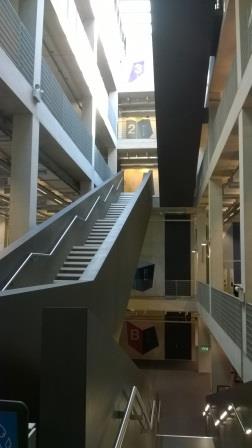
Central giant stair case

A set of enormous stairs run through the centre of the building.

Library interior

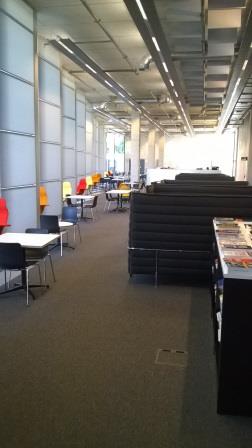
Social working space

On the other side of the stairs is this rather nice space with a variety of work environments.  The grey soafs on the right face each other over coffee tables providing space for around six people to work together.  The bright chairs are each by a tall window looking outside.

Shelves

Short loan corner

Short loan is back the other way with self issue inside the gate to control access.

Laptops

Laptop trolley

Print areas are divided from the rest of the library by mid height walls.  This one down past the big grey sofas housed loan laptops for use in the Library.  I like this idea as it provides flexible access which would be inclusive to all the users of our libraries.

sofas

Loads of sofa pods


PCs

Looks familiar


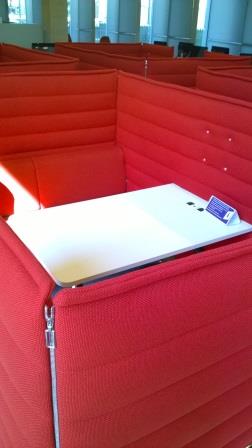
There are clusters of group work oriented sofa pods with high backs to provided some privacy and contain noise.

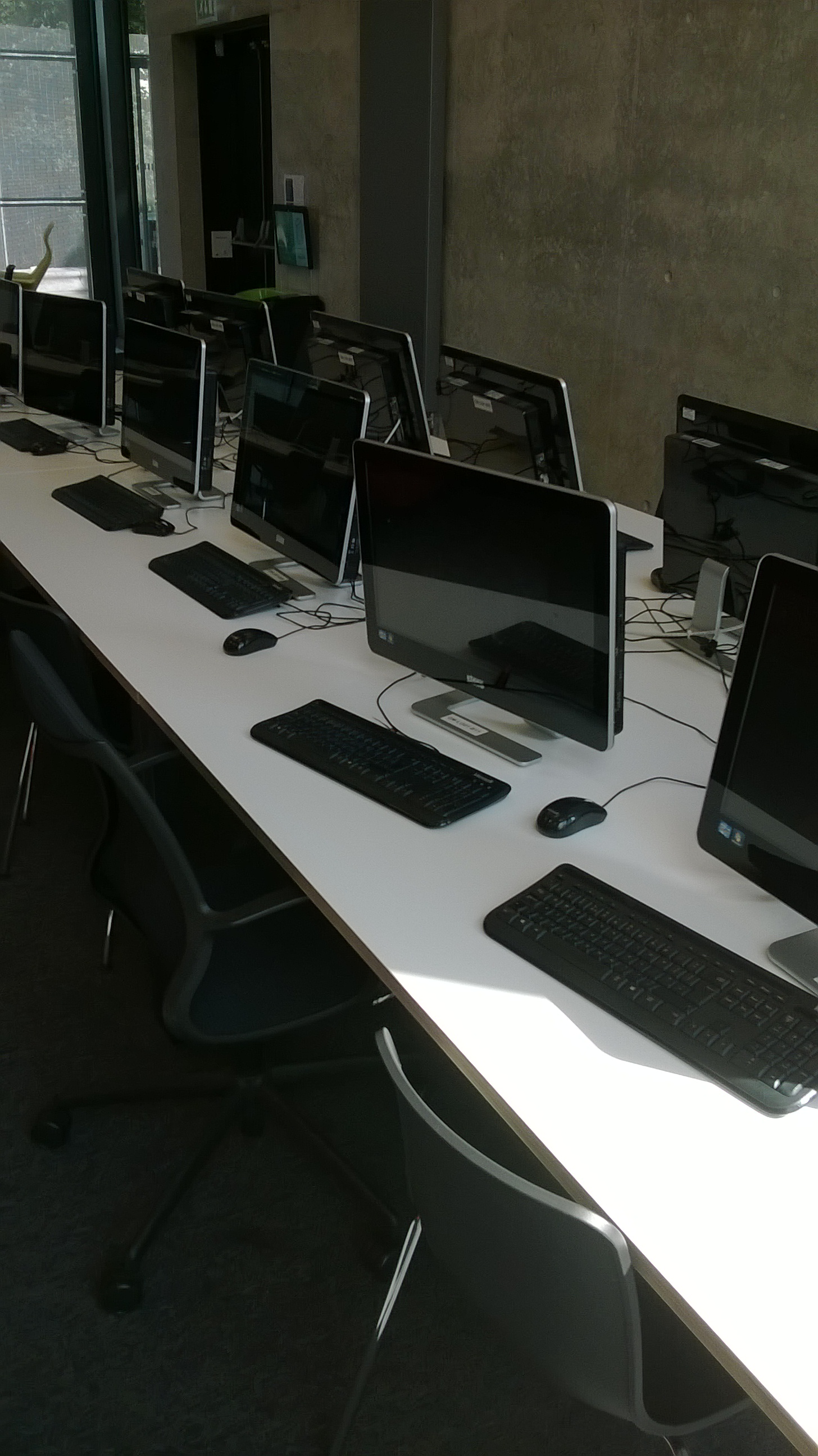
The fixed PCs are generally quite closely packed which is similar to the arrangements we have in place.  It would be nice to be able to offer more space for peoples stuff around PCs.


desk

Enquiry drum


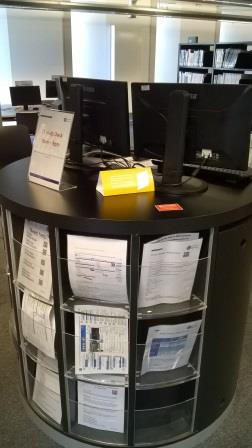
Wandering down into the basement we passed an enquiry point.  These are located around the library rather than having a single desk near the entrance.  Help leaflets are integrated into the furniture.  Not pictured are the archives who are located in the basement with some very fancy rolling stack.

chair

Wheely chair desk thing


shelves

Black shelves

library

Daylight into the basement


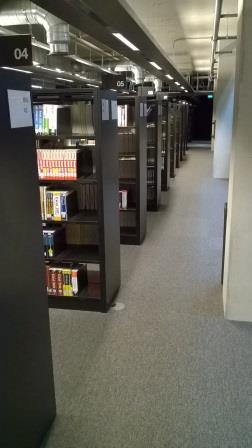
Shelving is generally not too high and slinky black.  The dark space in the distance of the left hand picture was in eco motion sensitive lights out mode (it was early when I visited).  There are clusters of desks and PCs scattered around.

training room

Laptops an option in training room

Training room

Looking from the trainers point of view

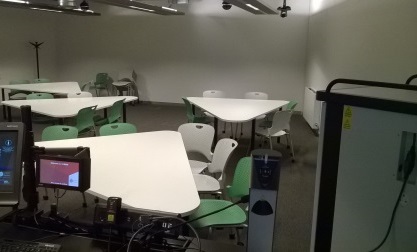
The training room is highly flexible with all furniture on wheels and capable of multiple layouts. This struck me as a really good idea.  Laptops allow the use of the space for hands on training though there would obviously be an overhead in set up time.

note the double screen

IT Enquiry Drum

IT have enquiry points too (note the double screen ahem).

PC

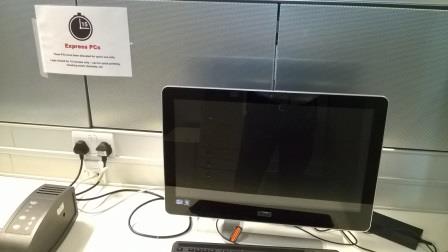
Standing PC for express use


Printing areas have PCs to allow people to hop on to print something off which is a nice touch.


water fountain

Double water


giant printer

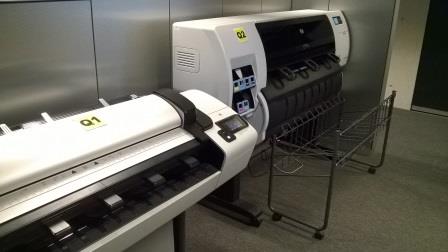
Self serve poster plotters

There are plenty of water points along with toilet facilities.

The needs of the architecture students mean that poster printers are self serve and very economical.


Sofa

Sofa pod for one to ones with students

The main staff office is on the top floor (plus some palatial quarters behind the book sorter down stairs).

office

Wide open office


We finished our tour at the staff meeting room which has a rather nice view.  I was impressed with the range of study environments in the library (not pictured are some group study rooms).  The library has a number of roof top gardens with some open for library users.  Thanks to UoG colleagues for the welcome!

Greenwich view

Not a bad view

#buildalibrarian run complete but still open

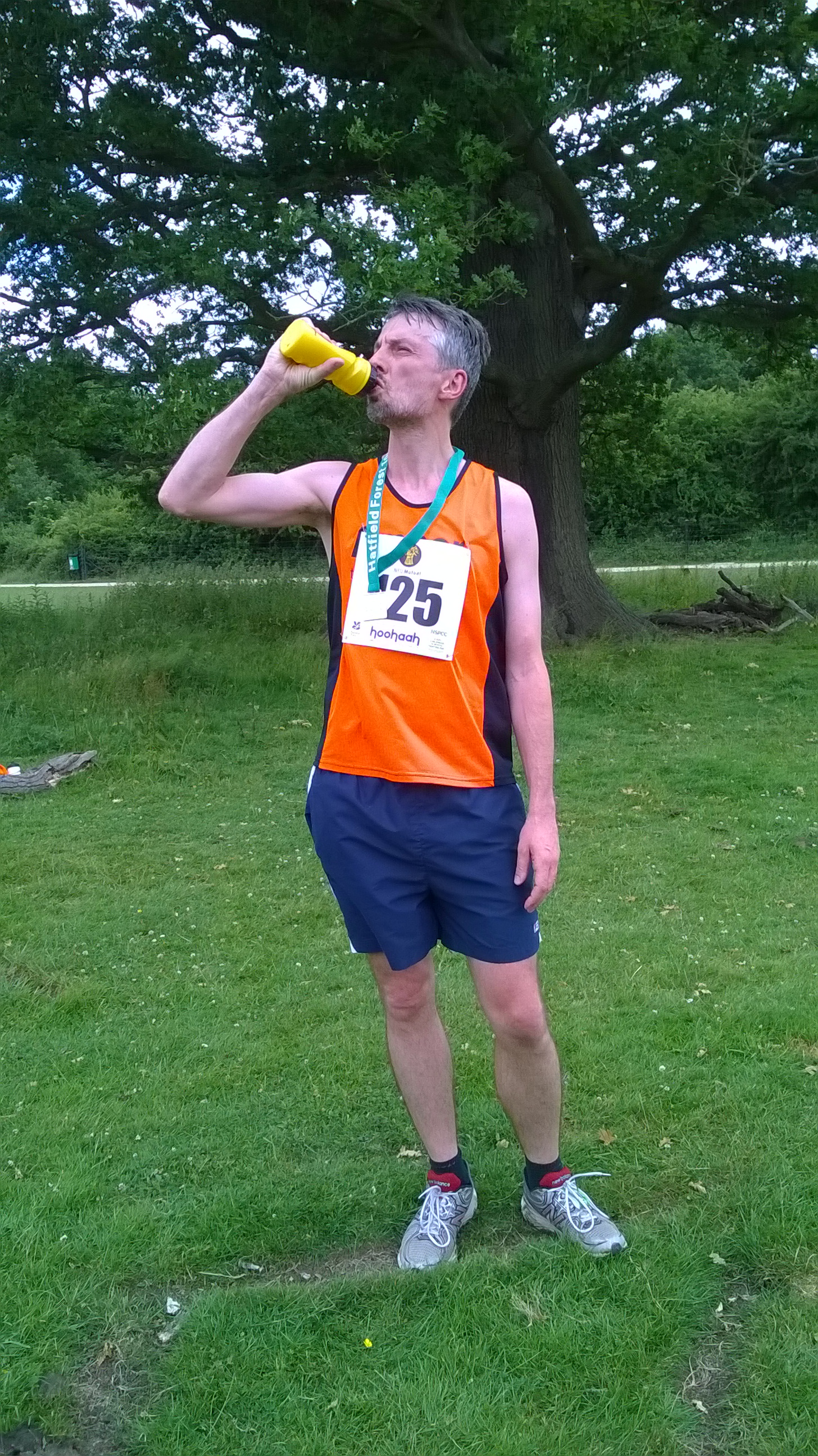
Last Sunday saw me complete the run part of #buildalibrarian.

Tired

After Hoohaah race

On a personal level I was very pleased with a time of 52 minutes 11 seconds which was miles inside my previous best (and triggered some extra performance related money!).

Fund raising wise I have gone well beyond what I hoped.  At the time of typing there is over six hundred pounds on the totaliser even without the gift aid. The Just Giving site will stay active for another three months so there is still time for a bit more money to trickle in.  I have already updated it with some before and after pics.  There will be terrible red faced action shots worse than the above for kind supporters.

I hope to update in future about Partnerships in Health Information – have a look at their spiffy new website http://www.phiinafrica.org/!

A hoohaah for Partnerships in Health Information #buildalibrarian

Partnerships in Health Information is a small charity I have supported for a number of years.  They work with African libraries to build capacity, support evidence based practice and improve public access to health information.

Last year I spent the morning exchanging knowledge with two Tanzanian librarians who had been hosted by PHI as Commonwealth Professional Fellows for a three month study tour in the UK.  It was a great reminder of the valuable work PHI do. I was also prompted by a tweet about #buyalibrary from a couple of years back. I hope people will be as keen to #buildalibrarian

I have registered to run in the Hoohaah run on the 21st of June. There is 10k to cover with a bit more by way of gradient than I am used to so it should be reasonably hard work.

I am using JustGiving as PHI have an account with them and as a very small charity this is a very effective way to get money to them.  I am not a great runner by any means – lumbering of foot and red of face.  You can track my early morning efforts on Endomondo if you want to be sure I am not slacking off.

If you can give a little something that would be great. Even better would be if you could give a little something and share what I am trying to do (https://www.justgiving.com/Hoohaah-for-PHI/). Or just share!

Thanks

Bad pharma is good reading

Another book recommendation as I belatedly read books I should have read when they came out.

Bad Pharma is a book health librarians must read (anyone with an interest in how decisions are made on medicines would do well to do so) (wikipedia has a summary for the tl:dr crowd).

During the period I was reading it I ran more than my usual number of critical appraisal sessions and the book was a great source of new examples to call on as I discussed bias, ethics and the niceties of what gets published.  It does cause some issues as the picture of the extensive failings of our publishing system may leave people feeling somewhat deflated (it did me).

The chapters “missing data” and “bad trials” offer the richest source for improving understanding and helpful stories.  The final chapter on marketing is depressing in the extent of the work of drug companies in this area. More money is spent on marketing than research. Medical education is reliant on drug marketing money.

Very few of my trainees had read the book (though that might be why they were at my training) which surprised me given the profile of the author and the subsequent media coverage of All Trials.

Update catch up September 2014

On we go with another issue…

I was interested in the report of Arts Council research on the impact of automatic library membership. Sadly it seemed the research was a bit patchy with issues in getting going at many pilot sites. I can see similarities to work that has gone on in the NHS to blanket sign people up for eresources. The conclusion point to this being a boost to awareness but needing follow up to take advantage.

I liked the idea of the Random Coffee Trials (see what they did there?). This is a NESTA initiative to encourage knowledge sharing and networking within organisations. This could be worth a try as we look to work more closely across a large directorate.

Glad to see tales of a successful reinvigoration of a school library service thanks to a Foyle Foundation grant and the input of Librarian to make the most of this. You can read the article here. I am glad CILIP campaign on the importance of school libraries.

Also heartened by tales of CILIP Member Network in Yorks and Humber in the light of my muttering over the London MN and the need to find a way to drive more engagement and involvement in this.  We are helped in London by good transport links, hugely diverse professional environments and lots of people. Getting more of those people participating could do great things. The article on SLA ECCAs chimes with this – the vibes from SLA Europe people seems to often be more positive than that around CILIP. How to replicate some of that?

A last highlight was a piece on neogeography by a student. I hadn’t heard the term before but am very interested in the kinds of things it describes. I was fascinated by GIS in my first degree and will read more on this (see also volunteered geographic information).

Reflecting on Lean in

Nearly two years ago the Library Leadership Reading Group (steered by the super Jo Alcock) read Lean in By Sheryl Sandberg. I did not have access to a copy at the time but read commentary on it and watched her Ted video.

There was a really good twitter discussion in the group that you can read here.

Thanks to the serendipity of wandering the shelves at the Public Library I have finally got hold of a copy and read it (sadly the period between me borrowing it and reading it encompassed the death of the author’s husband David Goldberg). I am glad I took the time to read the book and would recommend it to all (it is a value packed 170 or so pages).

I am very aware that any comments from me come from a position of privilege. I also do not wish to share too much of what is not mine alone to share. Suffice to say that I recognise my own failure to do all I can do to advance equality at home and work.

The book strikingly presents some of the ways gender impacts on how people are perceived, treated and work. It places a challenge to men and women to address imbalances that remain significant. We need to talk about these issues and we need to work on addressing them.  I plan to do both – at home and at work.


Update catchup August 2014

Slightly scared that I am falling yet further behind with these!

The August 2014 issue has a beautiful image on the front from the National Fairground Archive and has probably travelled as many miles in my bag as many a travelling fair. I loved the article on this collection. It sits far from the things I am involved in professionally but I am always pleased to read about such a fascinating cultural treasures.

This issue has a report from HLG Conference which took place in sweltering heat in Oxford. I really enjoyed the conference offering up a version of my paper given in updated form at UKSG.  I also spoke as part of the CILIP Debate programme. There is a nice picture of me chatting with Donald Mackay at the end (and a great boggled eye one in the Dropbox collection for the conference.  I was on the losing side but this was no surprise since I had to advocate for hiring nurses using precious library funding. I gave a rather silly talk full of ill informed comment on the merits of the internet and the low level of need for our skills (not like librarians are the angels of the NHS eh?).  But I was very serious on the point that unless we act to defend our services they will get whittled away in a semi random fashion.

The article on tri-borough in London public libraries is interesting as a picture of one route forward for making the cuts that will face many services. I wonder how far such arrangements can extend – what is the most effective scale for a PL network? It is also interesting to read what @wylie_alan had to say about it after attending a CILIP in London event a couple of years back. Some things look like they could end up a bit thin – a public health officer for one borough is now spoken of as one for the tri-borough. Could be a bit busy! That said I am not sure the shift of Public Health from the NHS to local government has seen library provision survive very well.

The merger of Careers Development Group into the CILIP Branches to form Regional Members Networks seems a reasonable plan overall to me. That said I bumped into a member of the Cilip London RMN on the tube today (small place London) and it sounds like the committee is almost unchanged from when I was a member a couple of years back. A number of that committee have done very long service and I had hoped that the merger might prompt a renewal with fresh blood. Maximum terms of membership are supposed to be in place and I hope people will move aside to allow others to have a go.

Reading about Midlothian libraries I was struck by how similar our issues are in terms of needing to influence decision makers. A steady stream of data and stories is required to help people outside our world understand what we are busily up to.  The need for partners is also familiar. I was somewhat dismayed by the fact that the service is so short staffed that people are working through their holidays and in their own time.  This is simply not a sustainable way for people to live and for a service to operate.

Revalidation submission celebratory post

With only a slight hiccup due to my previous submission not having been marked as passed (rapidly rectified by Member Services) I have finally got round to submitting my CILIP Revalidation based on 2014 CPD activity.

It was great to take the time to reflect on a fairly hectic year. HLG conference was a highlight. I also felt the journal club I ran with colleagues at work was an excellent way to learn.

I was surprised quite how many libraries I visited in my travels.

I have not had a chance to join one of the seminars on obligatory revalidation but I am happy that it is a useful process for me.

This years celebratory tune from MJ Hibbett (minus the (re)validators) is a cover of Boom Shake the Room – enjoy!