Well fellow there?

I have pondered applying for Cilip Fellowship a few times.  The latest provocation was the realisation that under the old revalidation scheme the third round would have made me a Fellow.  I appreciate the new scheme is less of a job than the old one but the discipline of revalidating made me very aware of the range of development I have completed over the years. Generally I have been put off by the slightly minimalist guidance available on the process.  I have also been busy learning about life in HE and completing the AKC (final year of this at present).

A timely event organised by Cilip in London in October helped quell some of my doubts about the process. Hail Fellow well met brought together potential fellowship candidates, those already in process, some Fellows and those involved on the assessment side.  While there were some useful materials available it was predominantly the opportunity to have a conversation with those who understood the nature of the process that made the difference. There are alos a good few people I know on Twitter who are engaged in the process at present so I have a ready made community to discuss things with.

I had mooted starting the process next year to my boss but have ended up plumping for just getting on with it so there will be a bit of Fellowship commentary on here in the coming months.  In the first instance I am all registered, have found a mentor and found a copy of the portfolio book in the work ebook collection (the paper copy is not on the shelf and not issued – tut).  Anyone know where I left my CV?

#HLG2016 cutting through the fog

A few thoughts while #HLG2016 remains fresh in the mind.  Hopefully there will be a good number of reflections shared in the coming days (Abi Alayo has been quick off the mark with her thorough posts for the first and second day.  I am likely to be less thorough!

The conference had a packed agenda but it is the window to talk to so many colleagues that really makes it.  This started ahead of time on twitter with the depth of adoption of this channel continuing to grow (NodeXL analysis of patterns of use, language and so on). The journey up offered time for initial conversations and the world was partially set to rights with Ben Skinner on a later than hoped for train from York. One of the topics was around the challenge of liberating the data that we hold and need to use (more on this in another post).

Safely arrived at the Royal there was time to help some guy push his slush puppy cart into an arcade and to buy three pints and half a coke for £7.70 (Seven pounds seventy pence London pub drinkers vidiprinter) down on the harbour side.

The next morning started with the pleasure of finally meeting Michael Cook after years of being in contact online.  Running along the sea front was a great way to open the day and to get a feel for the fog. This was one of at least a couple of semi organised runs by delegates and it would be a nice thing to continue at future events.

The conference venue was the Scarborough Spa which had a slightly faded glamour but met our needs overall (the wifi worked!). The shifted date was less successful with the Higher Education contingent clearly reduced due to student inductions already being underway or looming.

There was a strong Knowledge for Healthcare theme throughout the two days which may have been off putting for some.  This is balanced to some extent by the extent to which the products of KfH workstreams are publicly available and often widely applicable.  The volume and quality of work going on is impressive with tool kits in all directions.  Work on increasing the role of centralised procurement rang some alarm bells for me – we have moved from £2mill spent centrally to £4mill but the view is that some £12mill could be spent this way.  That money is unlikely to be new money!  Efforts to look to the future of staffing are also welcome with another leadership programme and a development path for senior managers on the way.  I suspect there are non NHS health folk on the current leadership programme and I really hope so as it is important to get a wider perspective where possible.

I forget how long it is since the introduction of “Do once and share” but duplication of effort remains stubbornly persistent.  The work on Current Awareness illustrated this clearly with over 700 bulletins under production just from the people who responded to a survey on this. Approaches around consolidating these while establishing best of breed models feels overdue.  The guideline on good bulletin production will be one to watch for.

My own session on metrics drew a larger crowd than I had hoped for with pretty much a full room. It brought home to me the need for additional efforts to explain how the principles we developed for good metrics can be applied. In a similar way to the CAS bulletins I could see the germ of a plan to develop best of breed metrics based around shared templates. There was some confusion over whether this was an additional piece of work or a replacement for national statistics returns.  In essence I hope the principles will be used as part of the national statistics review to inform any changes.  What I hope I expressed strongly during the talk was that the interest in metrics is mostly  the extent to which they can drive useful conversations – with our stakeholders and with each other.  Through out the conference we were reminded of the importance of being active in the boardroom as well as at the bedside. Having something concrete to talk about that responds to the priorities of senior stakeholders must be a good thing. I will make some tweaked slides for the web and blog them in the next few days.

After the rush of presenting we then had a fun conference dinner from which I may have escaped with slightly too much CILIP HLG rock!

HLG Rock(s)

A pair of keynotes kicked us off well on the second day with Nick Poole running through progress at CILIP and recognising the impact of health library and information professionals work. I hope the new model for subscriptions and improving offer will have the desired effect to widen participation and membership. This was followed by a moving talk from Lynn Daniel on the Expert Patient Programme. While I am sure I was not alone in wondering about the evidence base for some of the interventions proposed it was clear that her work has considerable impact on peoples lives with access to information at the heart of it.

The expert work of Judy Wright in supporting research proposals was fascinating and highly relevant to some of the thinking I am doing about search support for my own organisation. This along with a number of discussions I had made we wonder a little as to how up to scratch our skills are in these areas.  While there are some seriously well equipped librarians out there I certainly feel that I know less about systematic review and other advanced searching than I would like.  As we shift to delivering more highly specialist work and automation advances we need to ensure that we can maintain credibility. More thoughts on this to come in another blog post.

Other useful talks were Jo Milton from Cambridge on UX work (experience sharing planned for the future) and Andrew Brown looking at RoI.  The RoI work confirmed how hard this is to do well and the risks associated with starting to move into the realm of putting a price on all things.

HLG committee were keen to hear about ideas for what else we might do. The potential for holding HLG Conference annually was suggested. I wonder whether we might run something like the UKSG one day event which combines a trade fair with a selection of talks? A notable difference is that this is a free event to attend. We could look to make the overall cost lower (no lunch unless a sponsor covers?) to allow this. I would also like to see HLG campaign with members to increase uptake of revalidation. The concept of regular revalidation is understood and undertaken by many of those we work closely with. HLG can lead the way on raising use of this method and normalising it across the profession.

We emerged from the fog as the train whisked us off home. This felt like an important conference and reminded me how much I love working in the health information community. There is no doubt that significant progress is being made across many areas of work. There is also no doubt that financial pressure is going to be intense for most of us. The call to engage with NHS Sustainability and Transformation Plans, with the patient information agenda and with making the future we want to be part of has to be heeded.

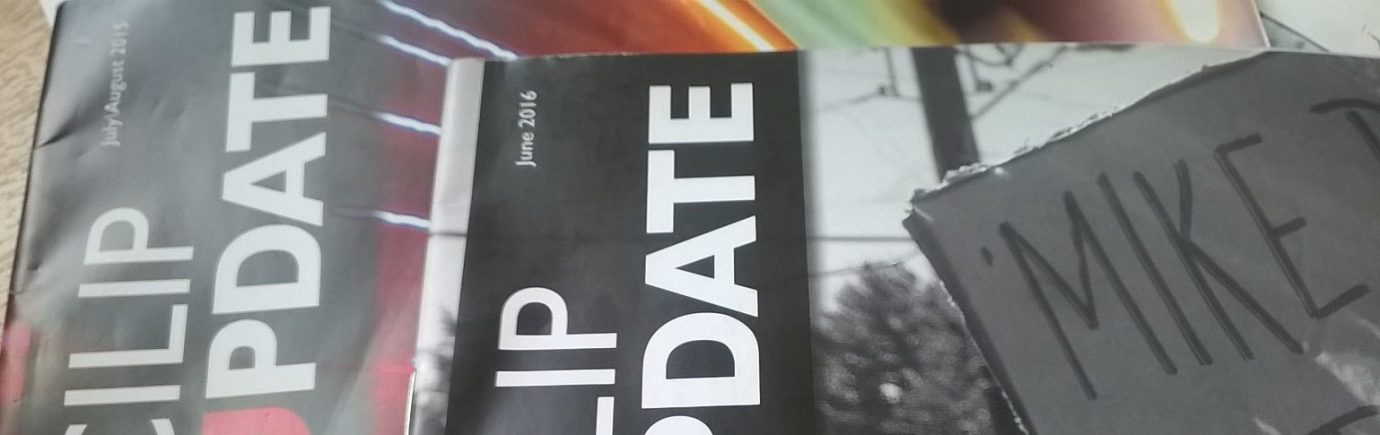
 

CILIP Update June 2016 and July August 2015

June 2016 Update (plus July / August 2015)

Thought I would have a change from reading about the chaos being unleashed by the EURef and flip through the latest from CILIP (and from them a year back).

June 2016 first.

Bit surprised that the consultation on the new membership model is given just a small news item. This seems a pretty big deal to me.  The new lower price is likely to be welcomed by many.  I wonder how strong the maths is on the number of people likely to take up the “leaders” option and how convincing the package of extra benefits is?  There will definitely need to be some strong recruitment of members.

Positive to hear how the Library at Ferguson supported the community following the shooting of Michael Brown.

Even more positive is the column by Dawn Finch as President on the importance of ethical principles in the profession.  I have been disappointed again by the decision of HLG to suggest conference sponsors should influence the content of the event.  For me this falls foul of the 7th principle

Impartiality, and avoidance of inappropriate bias, in acquiring and evaluating information and in mediating it to other information users.

Meanwhile back in 2015 when we had some semblance of order in UK politics.. Michael Gove was scrapping the book ban in prisons.

I really should have checked out the Impact Toolkit (launched in this issue) by now.  Glad to see Mary Dunne was involved – she spoke really well at HLG 2014 in Oxford.

Over the page is David Gurteen on Knowledge Cafes.  I attended one a few years back at the BDA but found it a bit overwhelming with numbers involved that day.  The focus on conversation is really helpful as we work on driving engagement at work.  A reference is lacking for the Zeldin book on Conversation which I recommend to all as a quick but worthwhile read.  I am very keen on the idea of conversation needing to take place in the physical world – definitely more benefit for me.  The more I can talk to people the better things go.

Interesting to read of efforts at Plymouth to provide core reading material as e-textbooks for undergrads.  It would be interesting to know how strong the actual usage was – a drop in paper circ for purchased titles was mentioned which you would expect.  The preceding article on ebooks was a handy reminder of a few issues and options as I look at what I can do for my NHS users.


May 2016 Cilip Update (plus September 2015)

Time for a quick read of the latest issue and one from the pile.

May leads on Shakespeare which is understandable given current celebrations (there are just a few days left to see the King’s College London “By Me William Shakespeare” with collaboration by the National Archives and the London Shakespeare Centre.

An exhibition with a few more days to run is “Scholar, courtier, magician: the lost library of John Dee”. It was great to read such a clear explanation of how this had been put together and the pleasures / pains of it all. @girlinthe had already been giving us a good flavour and this is a good example of how social media can get people involved in something well ahead of time.  I need to be sure to go before it closes in July.

The other main articles of note for me were about collaboration in health.  The work of Macmillan with Glasgow Public Libraries demonstrates the importance of specialist information support within a more general service. Meanwhile work in the Wirral links an NHS library with public libraries to support reminiscence therapy provides shows a new service being created with powerful effects.  Both of these illustrate the debate around how NHS LKS should work with patients and the public.  I understand the unwillingness of NHS services to open entirely to the public – the services required are very different and difficult conversations need the right preparation / conditions. I need to make the connections into the relevant services locally to see what we can do.

Nothing massively spoke to me in the September issue – these things happen.  Glad to see the progress of works at the Glasgow School of Art.

Revalidation – going for the threepeat

Spookily almost a year to the day since I last submitted I have once again completed the documents to revalidate my MCLIP.

I hope the current discussions at CILIP will finally see the launch of the online register of practitioners the long overdue public face of revalidation.

It has been another packed year professionally with a host of new conferences, visits, LibUX, Metrics and more. Plenty to reflect on! If anyone wants to talk revalidation do give me a shout – happy to talk you through it.

This years mandatory revalidation celebratory tune from MJ Hibbett and the Validators is – Things will be different when I’m in charge from the Album “This is not a library”

Update March 2016 (and November 2015)

A new issue of Update means a new back issue pulled screaming from the vaults.  First up November 2015…

I like the Karen McFarlane definition of KM as ‘good IM practices alongside knowledge sharing behaviours’. It helps get past the nagging voice of Tom Wilson in my head whenever I see KM.  I am looking forward to seeing what the NHS Knowledge for Health group working in this area comes up with.

A note of a warning from the Local Government Ombudsman that outsourcing does not remove responsibility for quality of service is interesting in context of a recent article on council insourcing as contracted out services prove inflexible and expensive.  The plans for Gym Libraries in Lambeth is a good example of what can come from this.  This looks like a straightforward reduction in service and commercial land grab.

The puff on two library supply companies merging is seriously lacking in any critical examination of whether this is in fact a good thing for libraries.  There is rather a lot of churnalism style content press release cut and paste in this issue.

Great to read David McMenemy as a much needed counter weight to the “news”. It was really helpful to have something place developments in the profession in the context of developments in politics and society.  In a recent consideration of a team goal I drew up a statement that reflected values around empowerment of people to advance the cause of human knowledge.  This was felt to be hard for people to relate to their day to day work but this article reassures me that we should be grounding our practice in the long term and those things that are true.

An article on reinventing public libraries was interesting on two counts.  The “community driven” future vision sounds to me (as a non public librarian) to be what I would have expected to be the model already (I have had some experience of the work of commonfutures that they mention as it happened in my local library).  I was also interested in the 6 future services they identify.  Open content has real potential – moving beyond the current limited access available via Finch.  The role I would envisage would be in supporting research and access. I was also interested in the combination of MOOCs and widening participation.  This struck me as something with real possibility.  Working with students we can see how important the library is a place that is warm, safe comfortable and equipped for study. There must be a place for more collaboration between education and the public library network.  An obvious example is that my local library is no longer open in the evenings when it would be most useful for students from the local college (as well as those who work away in the day time).

I have to declare an interest in the next article on the Quality and Impact work stream of Knowledge for Healthcare. I contributed as Chair of a task and finish group looking at metrics.  We have prepared a report on principles for good metrics which will hopefully surface soon. As part of the research I prepared a poster for the LHL NHS/HE conference in the autumn. Annoyingly the group members are listed incorrectly – the main folk involved have been Dorothy Curtis, Lorna Wilson, Tracy Pratchett and Richard Parker.  It has been a real challenge working with a group spread across the country. It was striking how much more effective we were after having had a face to face meeting – something I would certainly try to have sooner in future such projects.

Back to the present – March 2016 Update…

The launch of the Cilip Online register of practitioners is announced as set for the 14th of March – not before time. I had an enlightening conversation with a colleague who I would have expected to be all in favour but who had voted against revalidation.  Sadly I think it reflects a need for much greater communication and engagement around the new revalidation process.  The traffic on jiscmail lists on this topic was depressing.

The Yale MeSH Analyzer looks like it could be a nifty tool.

An article on life as an outsourced library chimed with what I just been reading from the November issue.  The experience shared does not seem to me to offer any great advantage from being outsourced other than reducing MoD headcount. Providing a service to other organisations myself under SLA I know how much trickier it is to work with an organisation when you do not fully belong to them – I suspect this is less of an issue for the case discussed but I doubt it helps.

Work on developing data science courses connected to recent involvement I have had with information governance around data and high performance computing. There are major management problems to anticipate and a big role for metadata managers.

The Knowledge for Healthcare update this time is on the major work around Resource Discovery.

The cover article is on IP crime.  The focus seems to be mostly film / music with a side order of small fry ebook theft.  Missing is the storm around Sci-hub which is taking the unlicenced sharing of journal articles to a whole new level. I hope there will be something on this shortly as it raises enormous questions for a swathe of work we do.

Finally – a listicle from Matt Holland – I think a lot of what he says this time could be applicable to my own role where I do not often work at home but do not have a “home” at work either.  I like the idea of “not being strange” I would extend this to say “have some boundaries” – when work follows you home it can be hard to turn off.

Hello 2016 (goodbye 2015)

The new year is going to see a shift in the balance of my role. Over the past couple of years I have been delivering a fairly steady stream of sessions on literature search and basic critical appraisal. The time has now come for me to hand the bulk of this work over.  I will be sorry in some ways as I enjoy delivering training, get positive feedback and it is useful for meeting people. I won’t miss the admin and look forward to being able to focus more on the engagement part of my role.

In terms of last years plans it has been a mixed bag.

I did revalidate OK (and am very disappointed that the latest attempt to require this failed to pass). I completed the first year of my AKC which was a relief given the very different nature of this course and the need to complete a hand written exam. I also enjoyed running my workshops at UKSG.

Less successful was clearing the CILIP Update backlog – I ended 2015 even further behind than I started it. I singularly failed to blog about an article from each issue of HILJ. I got next to nowhere with the PKSB.

I do not plan to review all of 2015 here – there are plenty of posts to look back over to give a flavour of it and I will doubtless reflect more when I complete my 2015 revalidation.

I am going to have another stab at clearing the Update pile. I will do HILJ if I get to it. I want to have a look at the CILIP CPD system generally and the PKSB remains a target. There will be work to do on the Metrics group I am chairing and I suspect I will end up talking about that at HLG.

I am looking forward to the year ahead a great deal.

A trip to the pharmacy

Some time ago now I visited the Library at the UCL School of Pharmacy.

After an informative talk we went for the usual poke around.  Access is via a rather narrow space which holds a lot of kit.  There are currently several print systems in operation – a not uncommon complication but unlikely to be helpful for staff or users.  A new self issue system was being put in operation.  The space was rather odd but did serve as a useful noise barrier.

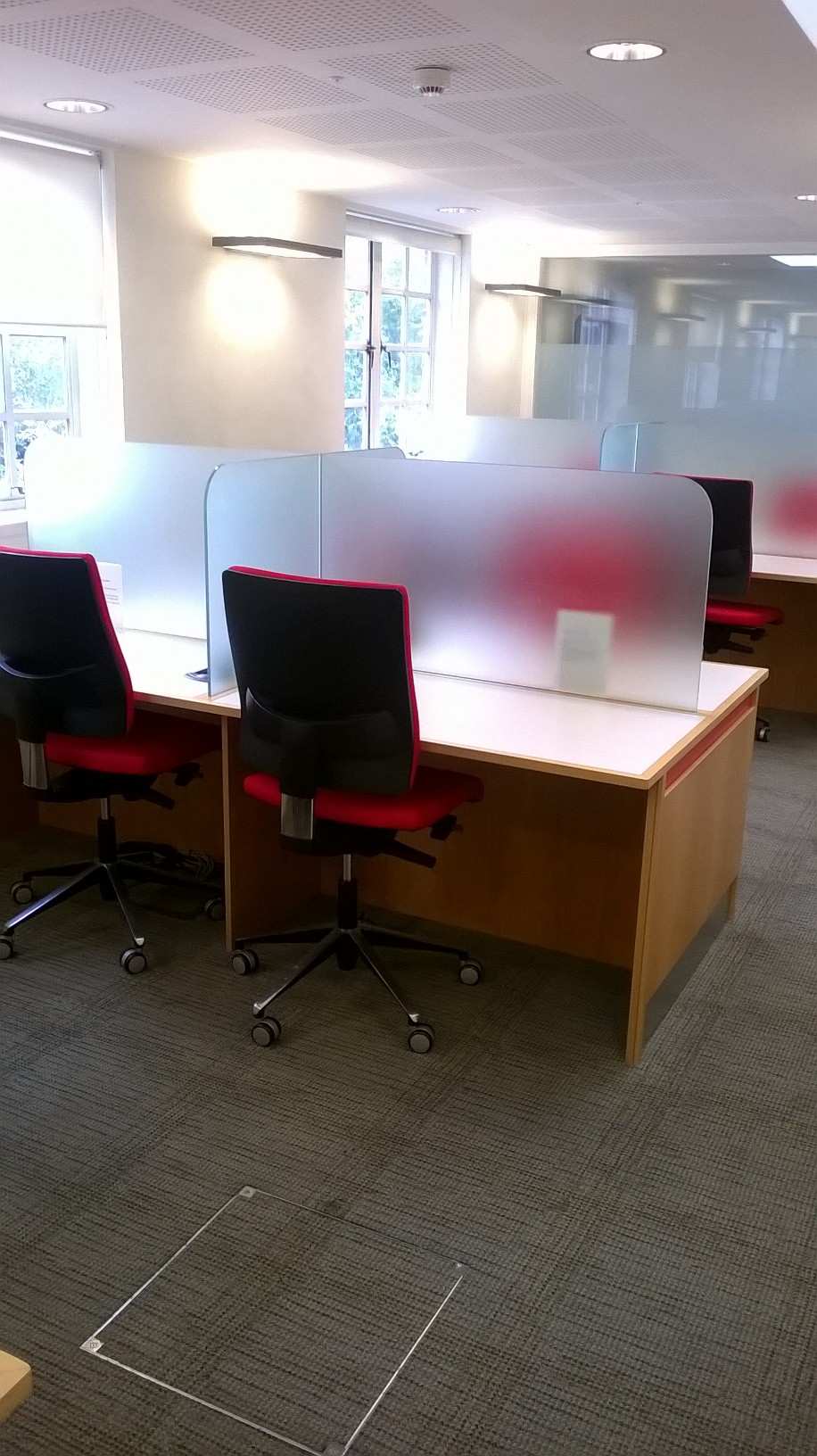
The Library itself is fairly compact and combines white walls with glass accents and red furniture for a bit of colour.

UCL School of Pharmacy Library desks

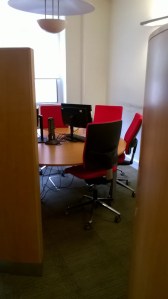
A range of study spaces are available with a small amount of group study space.  Frosted glass dividers allow light to pass while offering privacy. An area for group work was divided off using large wooden pUCL School of Pharmacy Library group areaanels that were attractive but would be tricky to shift I suspect.


UCL School of Pharmacy Library display case


Some use was made of special collections type materials to give it a more pharmaceutical feel.

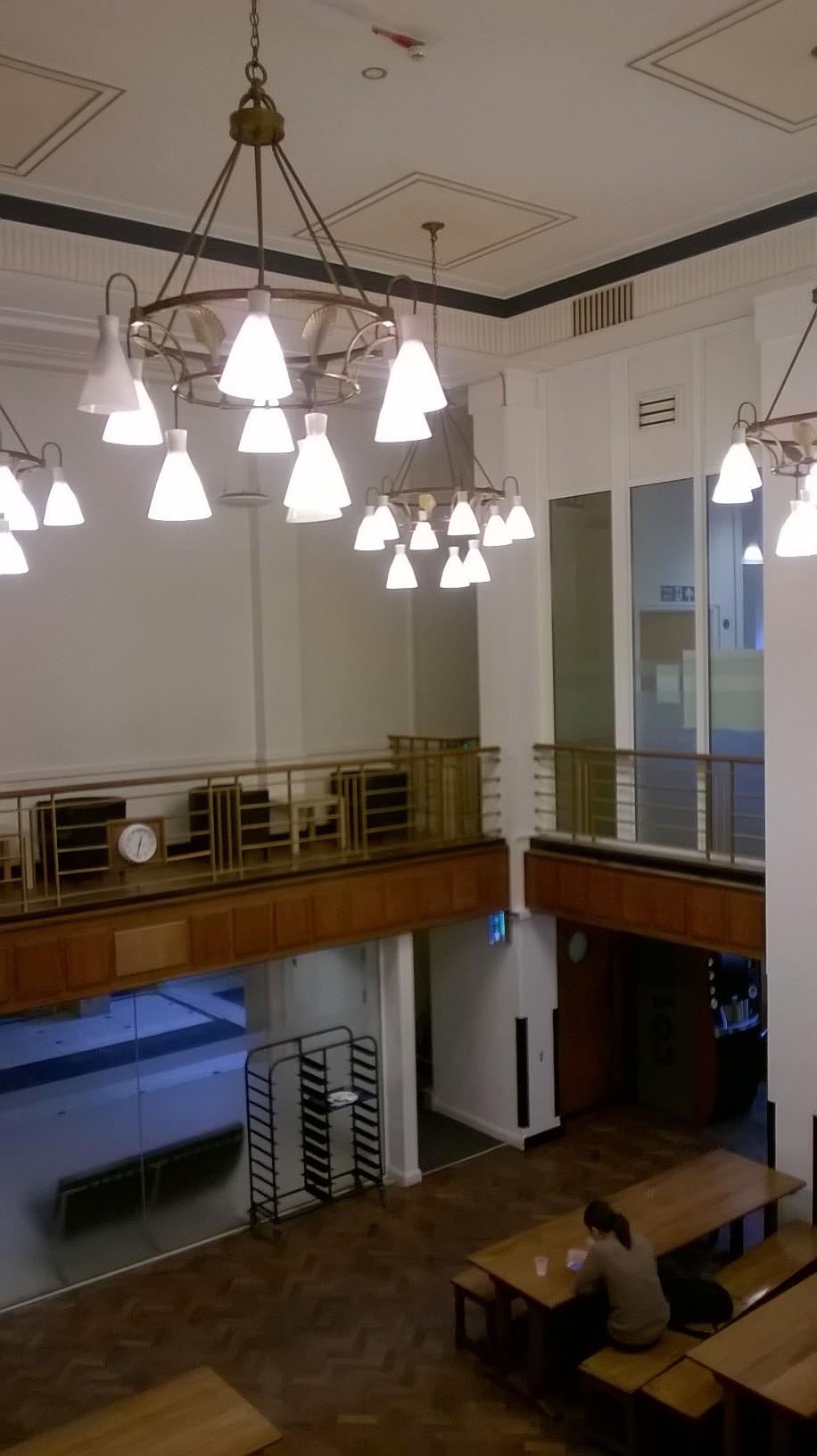
UCL School of Pharmacy Refectory

But I could not help wishing they had been able to have the space now used as a refectory that visitors to other libraries of the period (eg Senate House, NIMR at Mill Hill) will recognise as quite clearly designed for library use!

Journal clubbed

Our latest team journal club considered “The promise of academic libraries: turning outward to transform campus libraries” by Kranich, Lotts and Springs.

I picked this paper as it looks at how someone has been seeking to develop their liaison model through community engagement.  The team involved have clearly been exploring in a period of change and in some ways this paper felt like them reaffirming publicly some of the results.

We were very interested in the way they piggy backed on groups set up for other projects to have “community conversations”.  These gave space for senior staff of the institution to get together to talk about a wide range of questions across the scope of the institution.  While the links to library drivers were interesting it was the whole picture of the objectives and issues in play for the institution that was most useful.  The fruits of these discussions were then fed back to the library teams to give them a much stronger picture of the priorities and direction of travel of the university.  Similar conversation sessions were also held with library teams building internal understanding of work in progress and direction of travel.  Use was made of the ideas from the Harwood Institute and these look helpful as a framework.

Areas around impact were weaker. Some of the measures proposed sound very hard to assess with any accuracy.

Generally it was a positive paper as a statement of intent and helped drive a good discussion.

Update catch up November 2014

An information management themed issue.

An article from Laura Williams on embedded information professionals is encouraging.  I would have liked to have heard more about what she actually gets up to while embedded.  I have a feel for the kinds of things embedded clinical librarians would do and it would have been good to compare with a media role.

The article on scenario planning was a helpful introduction to this activity.  I tend to spend too little time looking ahead. An approach like this may be useful in plotting potential routes forward for my service.

I enjoyed the paper by academic Prof. Clive Holtham as something to chew on with ideas of what our role should include as professionals in a society increasingly focused on a narrow rational business oriented model.

An article on the changes to the RCN Library was a welcome update on the progress of their shift in focus.  Audience engagement is being pursued to broaden the range of activity supported by them and open the RCN more to the public.  Moving from defining and targeting an audience through to engagement is something that is highly applicable.  I know I have key audiences already for maximising the reach of my work but new ways to engage them will be of value.

The case studies on makerspaces and so on were a positive quick read.

Matt Holland is a regular author in Update and his latest listicle on working solo worked for me. In a big team I am far from solo but I have to think like a solo in terms of the scope of the people I work with and the difference to the core audience for the service.

This chimed for me:

In the end there are really only two tasks. Responding to your users better and marketing to your users so they come to you in the future. Everything else is just noise.

I also liked the idea of the need for focus – there are endless projects I could be involved in and could initiate but I won’t finish things that way.

The article on peer review in public libraries had me thinking about how to do a light touch version of this and to what extent it might already be happening in academic libraries.  Certainly there is plenty of history of it in the NHS.