Hello 2016 (goodbye 2015)

The new year is going to see a shift in the balance of my role. Over the past couple of years I have been delivering a fairly steady stream of sessions on literature search and basic critical appraisal. The time has now come for me to hand the bulk of this work over.  I will be sorry in some ways as I enjoy delivering training, get positive feedback and it is useful for meeting people. I won’t miss the admin and look forward to being able to focus more on the engagement part of my role.

In terms of last years plans it has been a mixed bag.

I did revalidate OK (and am very disappointed that the latest attempt to require this failed to pass). I completed the first year of my AKC which was a relief given the very different nature of this course and the need to complete a hand written exam. I also enjoyed running my workshops at UKSG.

Less successful was clearing the CILIP Update backlog – I ended 2015 even further behind than I started it. I singularly failed to blog about an article from each issue of HILJ. I got next to nowhere with the PKSB.

I do not plan to review all of 2015 here – there are plenty of posts to look back over to give a flavour of it and I will doubtless reflect more when I complete my 2015 revalidation.

I am going to have another stab at clearing the Update pile. I will do HILJ if I get to it. I want to have a look at the CILIP CPD system generally and the PKSB remains a target. There will be work to do on the Metrics group I am chairing and I suspect I will end up talking about that at HLG.

I am looking forward to the year ahead a great deal.
From the RSM to the RCN

Royal Society of Medicine https://www.flickr.com/photos/pressreleasefinder/5389444315/

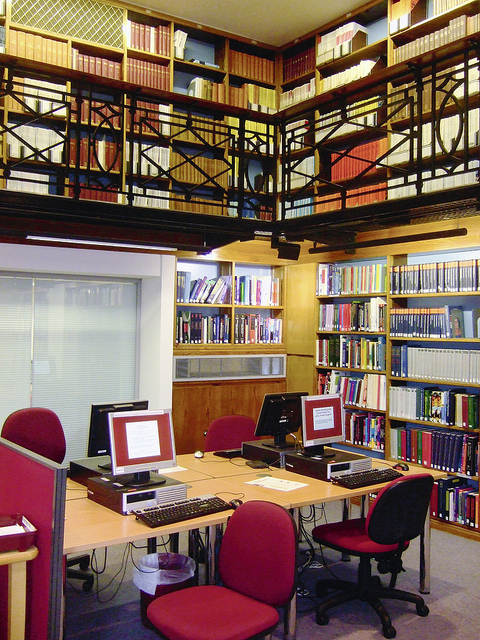
I took a trip with a colleague to the Royal Society of Medicine Library recently. I was interested in the range of services they provide and the kinds of spaces on offer.  The library is spacious with substantial areas dedicated to the extensive collections.  Paper journals are being phased out and this will release space for other purposes. Special collection type materials were presented in a heritage centre.  There are regular temporary exhibitions.

Generally there was a quiet atmosphere that felt generated by the users of the space. It was notable how much space each user had – very much one chair per desk.  Some areas felt like they were due a refresh and it was notable that power sockets were an issue for one user who was struggling to lift a hatch in the floor.

Training sessions were longer than the ones we tend to offer. Potentially this is more acceptable as people are already taking time out to go to the Library where courses closer to work may face more pressure to get back to the ward.

A series of study carrels looked well used and a small flexible group room at the end of this area was nicely presented. Green glass wall mounted panels allowed for note taking and would have good colour contrast.

An area outside the library had some really funky furniture and it would be nice to see some of this move into the Library as they dispose of the journal display furnishings.

Walking back to the tube we dropped into the Royal College of Nursing Library and Heritage Centre.  This was a huge contrast with the RSM Library having been the subject of a major redevelopment in the past few years.  The picture on the front page of their website gives a good idea of the feel.  There is a cafe area open to the public and a very well presented selection of nursing heritage related items.

I liked the fabric sound baffles but suspect that there must be noise issues due to the mezzanine design.  There were a  number of nicely parceled off spaces for small group work and a flexible training space much like the one at the University of Greenwich.  A digital room booking display for this was very clear and allowed immediate on the spot booking which was a nice touch.

Generally there were lots of different working environments in a fairly tight space.  There was a good amount of space required for the book stock.  Shelving was white as were the walls and most of the display type units.  This made things very clean and bright.  Excellent use was made of graphics to make it less overwhelmingly white – there were full colour blow ups of various items from the archives that were attractive and set a good organisation specific feel.  Signage was notably clear.

I loved the finish and feel at the RCN though I suspect if I was going to pick one to study at myself I would likely go to the RSM.

RSM image by PressReleaseFinder (C) Creative Commons


A trip to the pharmacy

Some time ago now I visited the Library at the UCL School of Pharmacy.

After an informative talk we went for the usual poke around.  Access is via a rather narrow space which holds a lot of kit.  There are currently several print systems in operation – a not uncommon complication but unlikely to be helpful for staff or users.  A new self issue system was being put in operation.  The space was rather odd but did serve as a useful noise barrier.

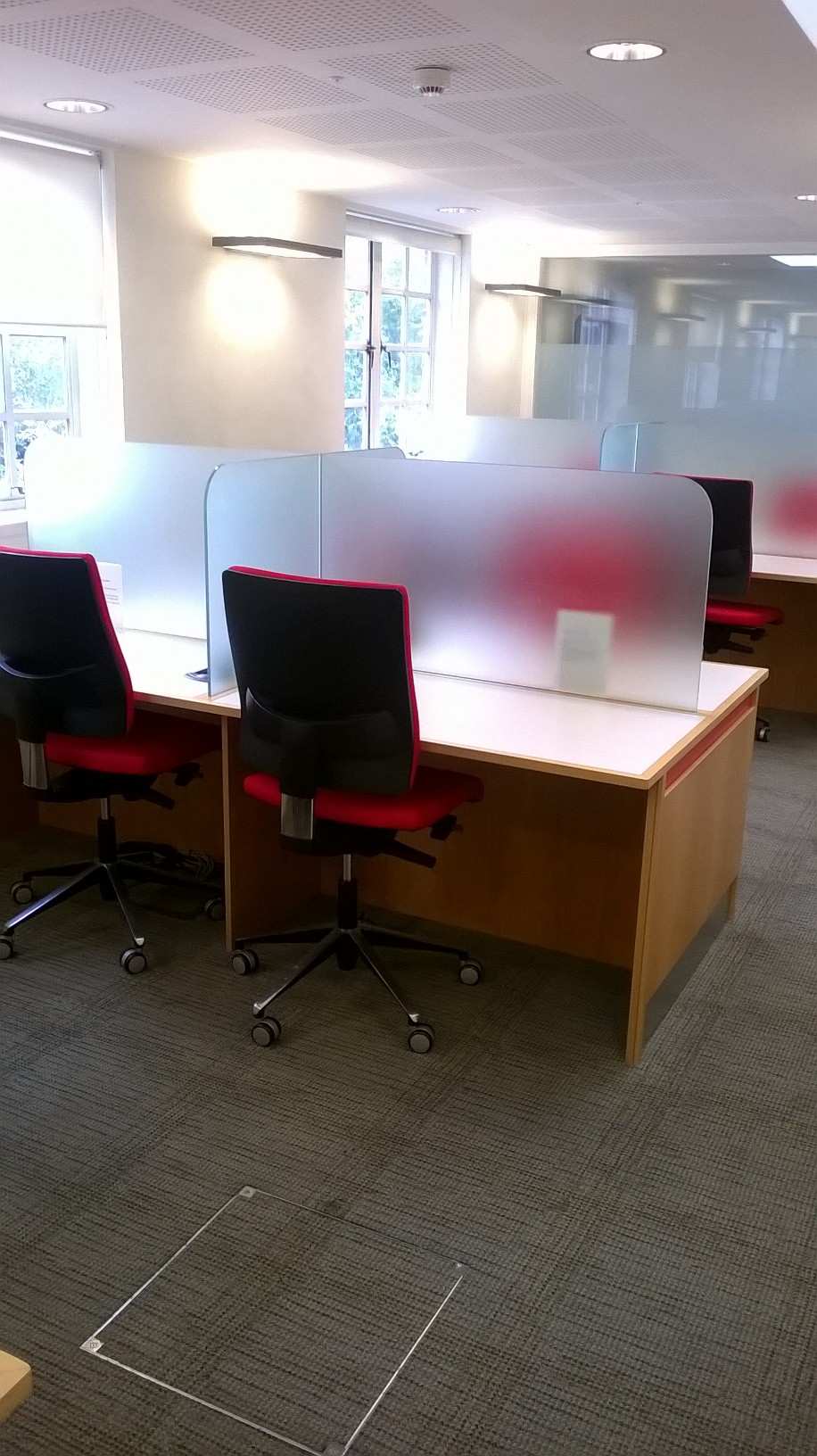
The Library itself is fairly compact and combines white walls with glass accents and red furniture for a bit of colour.

UCL School of Pharmacy Library desks

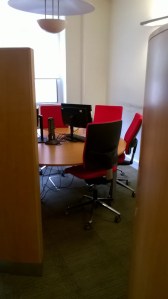
A range of study spaces are available with a small amount of group study space.  Frosted glass dividers allow light to pass while offering privacy. An area for group work was divided off using large wooden pUCL School of Pharmacy Library group areaanels that were attractive but would be tricky to shift I suspect.


UCL School of Pharmacy Library display case


Some use was made of special collections type materials to give it a more pharmaceutical feel.

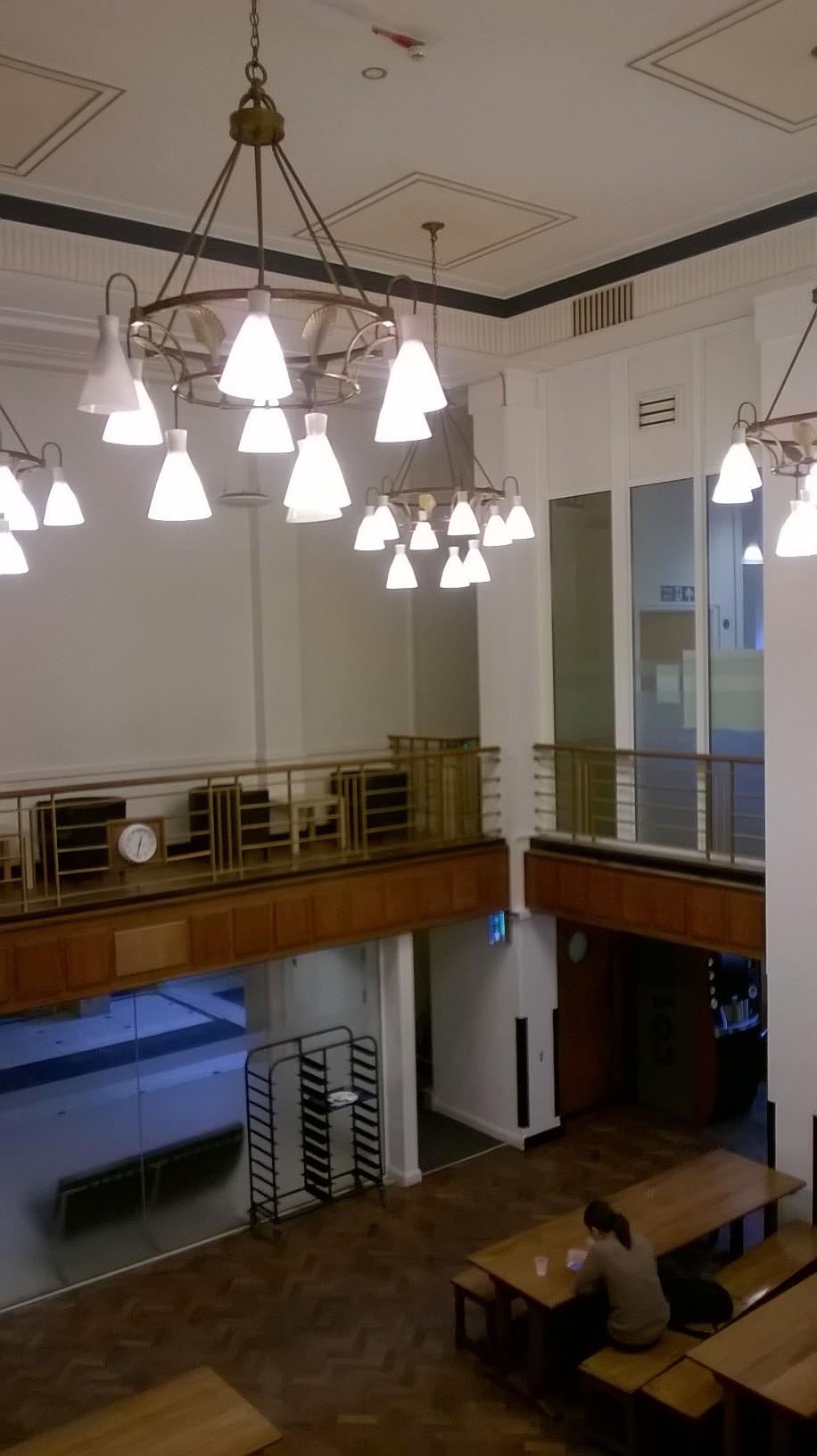
UCL School of Pharmacy Refectory

But I could not help wishing they had been able to have the space now used as a refectory that visitors to other libraries of the period (eg Senate House, NIMR at Mill Hill) will recognise as quite clearly designed for library use!

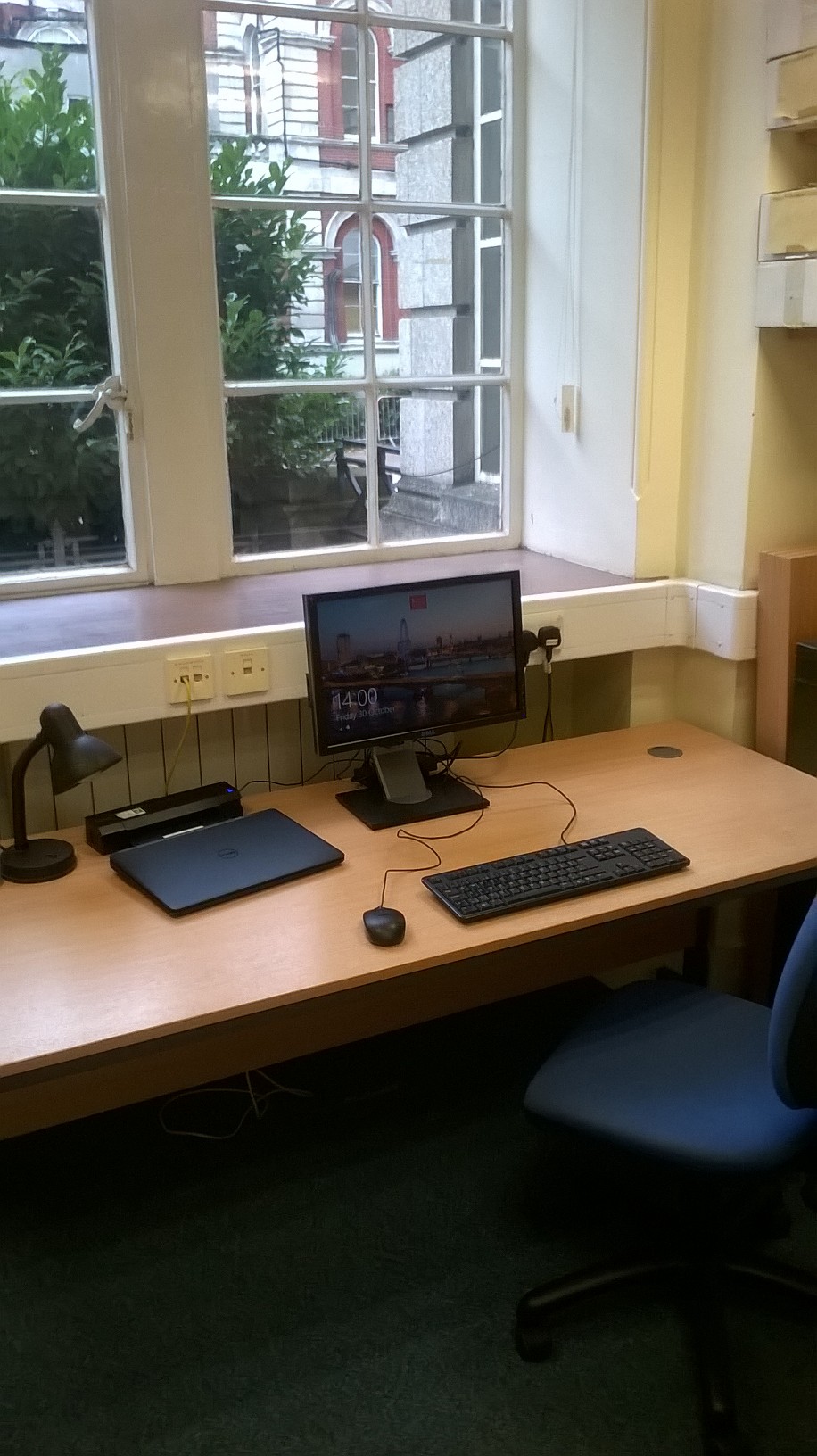
Office with window

Potential liaison role interview practical exercise

Somewhere not much under twelve months ago I discovered this office being used as a storage dump. Meanwhile I was working down in the basement, round the back of the rolling stack, with a view of some aircon fans.

I think getting yourself moved from a basement to a rather nice spot would make a pretty good practical exercise when looking to recruit new library liaisons.  Admittedly it would take a bit longer than the normal five minute presentation but I guarantee anyone who can achieve this task is likely to be worth having around. You could ask people how they might go about progressing this? Who they would speak to? How they might make the case and persuade people to their point of view?

Time to unpack!

Journal clubbed

Our latest team journal club considered “The promise of academic libraries: turning outward to transform campus libraries” by Kranich, Lotts and Springs.

I picked this paper as it looks at how someone has been seeking to develop their liaison model through community engagement.  The team involved have clearly been exploring in a period of change and in some ways this paper felt like them reaffirming publicly some of the results.

We were very interested in the way they piggy backed on groups set up for other projects to have “community conversations”.  These gave space for senior staff of the institution to get together to talk about a wide range of questions across the scope of the institution.  While the links to library drivers were interesting it was the whole picture of the objectives and issues in play for the institution that was most useful.  The fruits of these discussions were then fed back to the library teams to give them a much stronger picture of the priorities and direction of travel of the university.  Similar conversation sessions were also held with library teams building internal understanding of work in progress and direction of travel.  Use was made of the ideas from the Harwood Institute and these look helpful as a framework.

Areas around impact were weaker. Some of the measures proposed sound very hard to assess with any accuracy.

Generally it was a positive paper as a statement of intent and helped drive a good discussion.

A Wellcome trip

L0023184 The Food Value of the Banana. Boston, 1928

I had the pleasure of visiting the Wellcome Library recently (trip organised by CILIP ARLG L&SE).

While I have visited the revamped Collection spaces on a number of occasions the last time I was in the Library was some moons ago to hear Robert Kiley talk about the Internet and other such new fangled things.

The space very much matches the transformation downstairs.  I loved the shelf end bays that use images from the collection linked to the materials in that area.  There was good use of furniture to create different spaces though the book stock does dominate a lot of areas.

The Reading Room was an unexpected change and one I look forward to returning to.  The mixture of books, exhibits, art, interactives and seating was great.

We had a visit to the scanning mines of the UK Medical History Library project. They are going great guns in digitising large numbers of books including some from my employers special collections. A fascinating resource is being built (though the most viewed items are unsurprising).  I had not seen a foot pedal operated scanner in action so it was good to get an idea of how these work.

We also popped into the more cautious digitisation work where all manner of skills are in place photographing the large collection of early books.

A rich collection and one that I will heartily recommend to all those were it might be of use.

Image Wellcome Images L0023184 The Food Value of the Banana. Boston, 1928

Update catch up February 2015

You know the score by now…

A big piece on the Sieghart report the recommendations of which look pretty thin to me.  Not impressed latterly watching how the wifi actions are unfolding with overt commercial advertising presence and a bidding process rather than a universal offer.

The same news section carries details of the disaster at the Library of Birmingham which appears to be being gutted and propped up partially with more advertising cash.

Ask folks about the library and they tell you it is fine – but they don’t know any different. Paraphrasing R David Lankes.

A good bye article from Annie Mauger.  CILIP came on under her leadership though it still seems to be some way off winning back a lot of hearts and minds sadly. I hope she is enjoying her new role.

Phil Bradley tells me I should join Facebook for the good of my professional activity.  This is a tough one as I have steered firmly clear thus far and would prefer to keep it that way.  Not shy of social media but do I want another place?

I was interested to read about the continuing work around the Knowledge and Information Management as a recognised profession across the civil service.  These must be very tough times in those services and seeing a positive approach based around professionalism and skills is heartening.

Not an early Latin printed books expert but enjoyed the article on overcoming challenges around digitisation of these texts.

Ben Showers article linked to his book on Library Analytics and Metrics is very timely as I am now chairing a Knowledge for Healthcare task and finish group on this very topic.  His three areas:

  1. Measure what really matters
  2. Don’t collect it, or measure it, if you’re not going to act on it
  3. Make as much data available as possible

Are bang on really (and chime with other interesting things I have been reading and will blog about later).  I really like the idea that our data should be like dandelions – finding niches where ever they can rather.

Update catchup December 2014 / January 2015

Social media traffic this week from people pondering cancelling their membership of CILIP accompanied by statements that they had just popped another Update unopened on the pile.  I think this series of blog posts has shown that at least for this member there are always things of interest.
Who knows what will be useful in the future?  Not reading something is not going to help that is for sure.  Anyway that said, despite the double issue, this Update is not awash with articles that interested me.
There is a huge amount of news – almost half the issue.
CILIP Electionwatch was launched.  I was pleased to see this attempt to raise the profile of libraries as an issue at the general election.  Sadly the early days of the new government promise to be as destructive to library services as the equivalent period of the previous one. Hopefully the new CEO will bring continued focus on what are existential issues for many services.
The Library A to Z launch is also reported. Having backed this campaign I was disappointed that CILIP did not do so.  There were other organisations involved and I can see no reason why they were not.
There are some nice pictures of the new Uni of Greenwich Stockwell Street Library – since visited and discussed on this blog!
The book review of “The One-Shot Library Instruction Survival Guide” makes this sound an interesting read – one to recommend for the professional collection at work.
Spotted my name in the list of revalidating MCLIPs which was a nice surprise. I am waiting on this years efforts.
I liked the idea of the 23 librarians campaign to raise public awareness of the diversity of roles that librarians carry out (and their skills and impact).
Finally the article on student workers at Teeside Uni library was very relevant to developing areas at work. They used the Peer Assisted Study Sessions model which is doubtless old news to many but not something I recall meeting before.  It is great to see something building on what works.  Having looked at research literature on student roles around academic libraries there is a lot of reinventing and then not evaluating the wheel going on.  The article has what appears sound practical advice. One to share.
PS. Included in the envelope was the CILIP annual report with quote from when I submitted my first revalidation – had forgotten about being asked!


Critical Appraisal – OT paper with interesting features

Monday morning session on critical appraisal for some lovely Occupational Therapists.

We had picked out an RCT to look at together and it turned out to have some bumps.

Clin Rehabil. 2012 Dec;26(12):1096-104. doi: 10.1177/0269215512444631.

A randomized controlled trial of Cognitive Sensory Motor Training Therapy on the recovery of arm function in acute stroke patients.

Chanubol R1, Wongphaet P, Chavanich N, Werner C, Hesse S, Bardeleben A, Merholz J.
Interesting features:
  • A nice explanation of their power calculation
  • A variation in clarity of the protocols for the intervention and comparison
  • Outcome measures that are probably not that helpful (though better ones were hard to come by)
  • An intention to treat analysis that seems to exclude people who withdrew (?!)
  • An overexcited reaction to a subgroup analysis (they enjoyed this explanation of why that might be an issue)
  • Presentation of results with medians and IQR as well as means
A very good paper for discussion with OTs who have an interest in stroke rehabilitation.

Update catch up November 2014

An information management themed issue.

An article from Laura Williams on embedded information professionals is encouraging.  I would have liked to have heard more about what she actually gets up to while embedded.  I have a feel for the kinds of things embedded clinical librarians would do and it would have been good to compare with a media role.

The article on scenario planning was a helpful introduction to this activity.  I tend to spend too little time looking ahead. An approach like this may be useful in plotting potential routes forward for my service.

I enjoyed the paper by academic Prof. Clive Holtham as something to chew on with ideas of what our role should include as professionals in a society increasingly focused on a narrow rational business oriented model.

An article on the changes to the RCN Library was a welcome update on the progress of their shift in focus.  Audience engagement is being pursued to broaden the range of activity supported by them and open the RCN more to the public.  Moving from defining and targeting an audience through to engagement is something that is highly applicable.  I know I have key audiences already for maximising the reach of my work but new ways to engage them will be of value.

The case studies on makerspaces and so on were a positive quick read.

Matt Holland is a regular author in Update and his latest listicle on working solo worked for me. In a big team I am far from solo but I have to think like a solo in terms of the scope of the people I work with and the difference to the core audience for the service.

This chimed for me:

In the end there are really only two tasks. Responding to your users better and marketing to your users so they come to you in the future. Everything else is just noise.

I also liked the idea of the need for focus – there are endless projects I could be involved in and could initiate but I won’t finish things that way.

The article on peer review in public libraries had me thinking about how to do a light touch version of this and to what extent it might already be happening in academic libraries.  Certainly there is plenty of history of it in the NHS.